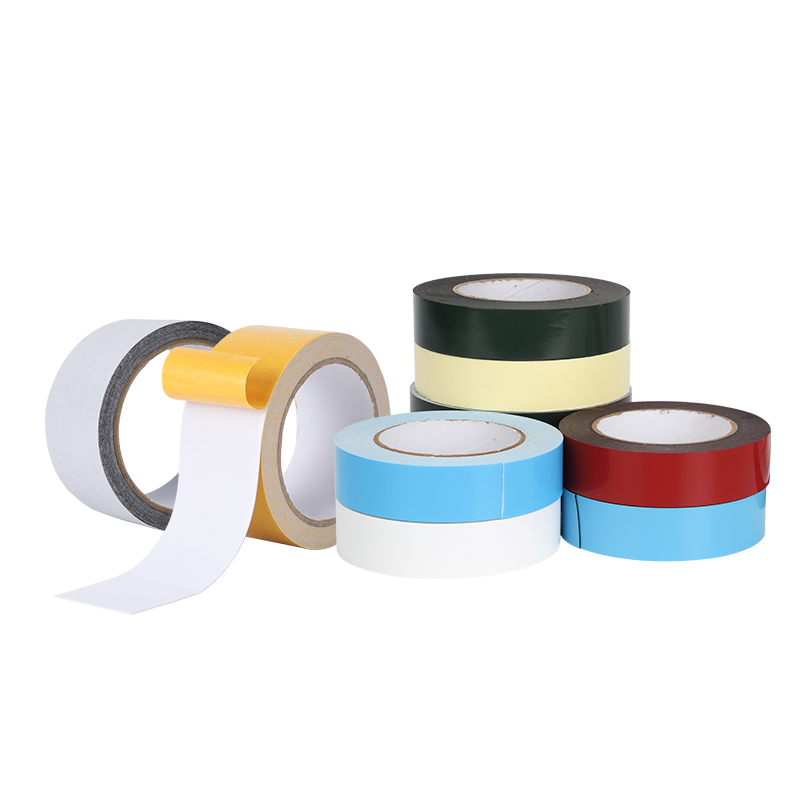
Primary question: How should a buyer specify 3m 4910 vhb tape and validate a sample?
Direct answer: A buyer specifies 3m 4910 vhb tape by writing the application constraints first — substrates, load, environment, bond area, and service life — then requiring the supplier to declare the exact product identity and orderable format in writing. The sample is validated with objective tests: ASTM D3330/D3330M for peel adhesion, and ASTM D1002 or D897 for shear or tensile bond on the buyer's own substrates, with pass thresholds agreed in advance. Procurement is released only when lot, date code, and certificate controls connect the approved sample to the material actually purchased.
Buyers rarely lose time on the tape decision itself; they lose it on ambiguity about which product was sampled and what was measured. The sequence below moves from application constraints to identity, format, application process, sample testing, and traceability, so that each step produces a documented output the next step can rely on.
What substrates, loads, environment, bond area, and service life must the tape satisfy?
A specification for 3m 4910 vhb tape begins with the application, not the part number. The buyer documents the substrates involved, including whether they are metal, glass, painted panel, or plastic, and notes surface energy and coating differences between them. The load case is recorded next: static dead load, dynamic vibration, or peel-prone edge loading, together with the bonded area and the joint geometry that carries the stress. Environmental exposure follows, covering temperature range, humidity, UV, solvent or wash-down contact, and the expected service life in years or cycles. Automotive and signage programmes often add their own durability requirements. These constraints decide whether an acrylic-foam tape is even the right family.
Open-weave and scrim-backed facings behave differently from solid panels, and a buyer describing the bond area can usefully compare them against mesh tape constructions.
Where the bonded assembly will be painted, powder-coated, or handled with gloves, the buyer notes the surface condition at the time of bonding, because contamination changes what the sample trial is actually testing. The reported bond area should be the load-bearing area after any gaps, ribs, or cut-outs are removed from the calculation, not the nominal tape footprint. Service life is expressed as a duration under named conditions rather than a single figure, so that a five-year exterior exposure and a five-year interior cabinet are described differently. Buyers who complete this step can say plainly why an acrylic-foam product is or is not the right candidate, and they hold the substrate list that later acceptance criteria will reference.
Is the offered item genuinely VHB acrylic foam tape, with the correct product family, thickness, colour, and liner?
The product name alone is weak evidence of identity. A quoted item described only as foam tape may be a polyethylene or EVA carrier, a generic acrylic foam, or another member of the same family, and those differences are not visible in a photograph. The buyer asks the supplier to state the full product designation, including the product family, the product number, thickness, colour, and liner, and to confirm that the designation appears on the carton and the roll core label. Where a distributor listing is the only document offered, its date and its stated attributes are recorded so the identity claim can be checked against the delivered goods.
A general 3m vhb tape guide helps a buyer frame the identity questions before any sample is requested.
Samples are requested against the written designation, with the supplier asked to send the roll label and a packaging photograph alongside the sample so that identity can be compared at receipt. Any supplier that answers with a generic photograph, an unbadged roll, or a description that omits thickness and liner is treated as an unresolved identity question rather than an approved source. The buyer also records which documents were unavailable at the time of quoting, because an undocumented attribute is a risk to be closed before purchase rather than a detail to be settled afterwards. The foam question therefore stays explicit through the whole evaluation.
What roll width, length, thickness, liner, core, and slitting or converted format must the purchase request state?
An orderable configuration removes ambiguity. A distributor listing records 3m 4910 vhb tape as a 1.0 mm transparent acrylic foam with a PE film liner, while 3M 5952 VHB tape (5952F) appears at 1.1 mm as a black acrylic foam with the liner not stated. Those attributes are recorded as the buyer's reference, not as a substitute for the supplier's own declaration. The purchase request states roll width, roll length, nominal thickness with tolerance, liner type, core diameter, and whether the 3m 4910 vhb double sided tape is supplied in log rolls, slit rolls, or converted shapes such as discs and die-cut parts. Splice limits and roll-end marking are named too.
Signage and panel-bonding programmes often define the roll format first, and acrylic foam tape for signage sets out the format variables that matter.
The sample must represent the production format. A buyer who trials a hand-cut strip from a wide log roll has not tested the slit roll that will be purchased, and a converted part can behave differently at its edges. The request therefore states that the sample is drawn from the same format, width, and liner as the intended order, and it names the unit of purchase so that the quotation and the sample label can be compared line by line. Listings that pair 3m vhb 4910 with signage and panel-bonding work make format the first variable to settle, because liner release, roll width, and handling stiffness decide how the tape behaves on the line.
What surface cleaning, abrading, priming, application temperature, pressure, and dwell conditions should be required?
Bond performance depends heavily on what happens before and after the liner is removed. The buyer requires a written process covering surface cleaning agents and wipe technique, whether abrading is permitted, and whether a primer is specified, since a primer changes the interface and must be recorded if it is used. Application temperature range, the pressure applied with a roller, and the dwell time before load is applied are all stated as process parameters rather than left to the operator. Because the intended carrier is an acrylic foam, the process is described for that carrier specifically, and any procedure borrowed from a different tape family is flagged for review.
A nonwoven tape belongs to a different carrier family and is named only to keep the carrier comparison explicit when surface preparation is discussed.
The test-method references available for bond evaluation are ASTM D1002, apparent shear strength of single-lap-joint adhesively bonded metal specimens by tension loading, and ASTM D897, tensile properties of adhesive bonds. Both describe how a joint is measured; neither supplies product-specific performance data, so the buyer treats them as procedure definitions. Reproducibility comes from fixing specimen preparation, bondline thickness control, the dwell period, and the conditioning of the assembly before testing. When the process is written down in that detail, a sample trial at one site can be repeated at another and the results compared without ambiguity about what was actually done.
Which tests and pass/fail criteria will be used on samples, such as peel adhesion per ASTM D3330 and shear or tensile bond tests per ASTM D1002/D897?
Sample approval rests on measurement, not on appearance. ASTM D3330/D3330M, the standard test method for peel adhesion of pressure-sensitive tape, provides a procedure for peel measurement, and the buyer names the peel angle, the substrate, the dwell before testing, and the number of replicates in the plan. Shear evaluation follows ASTM D1002 for single-lap metal joints, and tensile evaluation of the bond follows ASTM D897. Each criterion is stated as a threshold with a stated test condition and a stated substrate, using the buyer's actual materials rather than a supplier's reference panel. Visual inspection is recorded as a separate observation and not used as the pass criterion by itself.
The plan also states what counts as a failure and what happens next. A result outside the threshold on the buyer's substrate triggers a review of surface preparation, application pressure, and dwell before any conclusion about the tape is drawn, because those variables sit in the buyer's control. Replicates are retained and labelled so that a later dispute can be traced to a specific specimen. Approval is recorded against the exact sample identifier and the exact test conditions, and the approved sample is kept as the reference against which the purchased lot is compared.
What lot or date code, certificate or declaration, package labeling, sample ID, and RFQ clauses must be recorded to maintain traceability?
Traceability links the approved sample to the material actually bought. The sample label records the supplier, the full product designation, the lot or date code, the roll dimensions, and the sample identifier used in the test report. The purchase order repeats those attributes and adds a requirement for a certificate of conformity or a supplier declaration naming the product and the lot. Package labelling is described as part of the requirement, so that the carton marking, the roll core label, and the packing list can be checked against the order at goods-in. The buyer states which fields must be provided before shipment and which may accompany the delivery.
RFQ clauses carry the same controls into the quotation. The request asks the supplier to declare the product family, thickness, colour, liner, and format, to state whether the quoted item is the named acrylic foam product or an alternative, and to identify any substitution before award rather than at delivery. Date code recording at receipt, retention of the delivered roll until the bonded assemblies are released, and a named contact for technical queries are all written into the terms. When these fields are agreed in advance, an approved sample and a purchased lot can be linked without relying on memory or on a verbal assurance.
Frequently Asked Questions
Does LubandArt Tape offer acrylic foam tape?
Yes. The product lineup includes Acrylic Foam Tape under its Foam Tape offerings.
What is the nominal thickness of 3M 4910 VHB tape?
The 3M 4910 VHB tape has a nominal thickness of 1.0 mm. It is a transparent acrylic foam tape with a PE film liner.
Which ASTM standard covers peel adhesion of pressure-sensitive tape?
ASTM D3330/D3330M covers peel adhesion of pressure-sensitive tape. It is the standard test method for measuring peel adhesion for this type of tape.